

Billboards and large format advertising are one of the most important elements of the urban landscape, attracting the attention of passers-by and drivers. These large advertising panels have become an integral part of our daily lives, but have you ever wondered how they originated and how they have developed over the years?
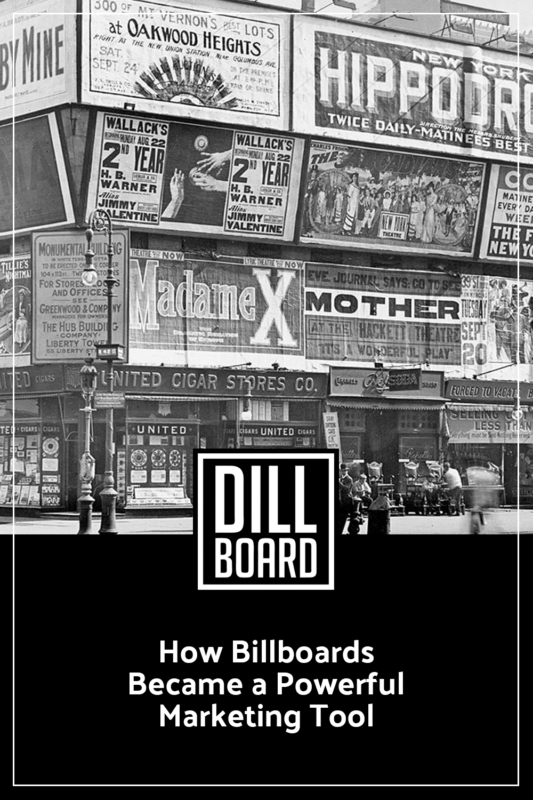
Billboards are nothing more than large advertising panels, placed in strategic locations, such as roads, airports, train stations, and bus stops, to reach as many people as possible. Their history dates back to the late 19th century, when the first billboards appeared in the United States.
The first billboard
In 1867, Jared Bell, the owner of a shoe store, decided to use billboards to promote his waterproof boots. He placed a large sign on the roof of a building on Broadway in New York City, where it was visible to passersby and drivers. This was the beginning of billboards, which have since become one of the most effective advertising tools.
The first large format ads
In 1900, the first large format ads appeared, in the form of posters printed in large sizes and pasted on walls. They were used primarily in movie advertising, but also in other industries, such as fashion and cosmetics.
The development of technology and materials
In the 1920s and 1930s, billboard printing technology developed rapidly, making it possible to print in color and use increasingly large advertising displays. As technology and materials developed, new forms of billboards began to appear, such as illuminated, moving, three-dimensional, and LED screens.
The influence of popular culture
Large-format ads and billboards began to appear in films and television as well, which increased their popularity and effectiveness. With the emergence of popular cultural icons such as Marilyn Monroe and James Dean, advertisers began to use their images to promote their products.
How technology has transformed outdoor advertising
Outdoor advertising, such as billboards and large format ads, has long been a staple of marketing campaigns. However, technological advancements have transformed this traditional form of advertising into a more dynamic and engaging medium. The first billboards were simple, static images that were painted or printed on canvas. They were often used to promote local businesses or events. In the 1970s, the first digital billboards were introduced, which offered new possibilities for presenting advertising content. These billboards could display animations, graphics, video, and even interactive content, which helped to capture the attention of passersby and drivers.
Today, digital outdoor advertising is increasingly popular and is often used in marketing campaigns. Digital billboards can be used to create engaging and interactive experiences that can be tailored to specific audiences. For example, a billboard could display a different message for each day of the week or could be personalized based on the weather or traffic conditions. As technology continues to evolve, outdoor advertising is becoming more sophisticated and effective. In the future, we can expect to see even more innovative and immersive forms of outdoor advertising, such as augmented reality and virtual reality.
Conclusion
Billboards and large format ads play an essential role in today’s urban space, attracting the attention of potential customers and increasing brand awareness. Over the past few decades, not only their appearance and presentation have changed, but also their role in the world of advertising.
Thanks to their flexibility and ease of customization, billboards and large format ads are able to reach a wide audience and attract the attention of passersby and drivers. Despite the competition from other forms of advertising, billboards and large format ads remain popular and remain an effective marketing tool for many businesses and brands.